Showing posts sorted by date for query Fabaceae. Sort by relevance Show all posts

Friday, September 26, 2008

Fortex green beans

fortex green beans

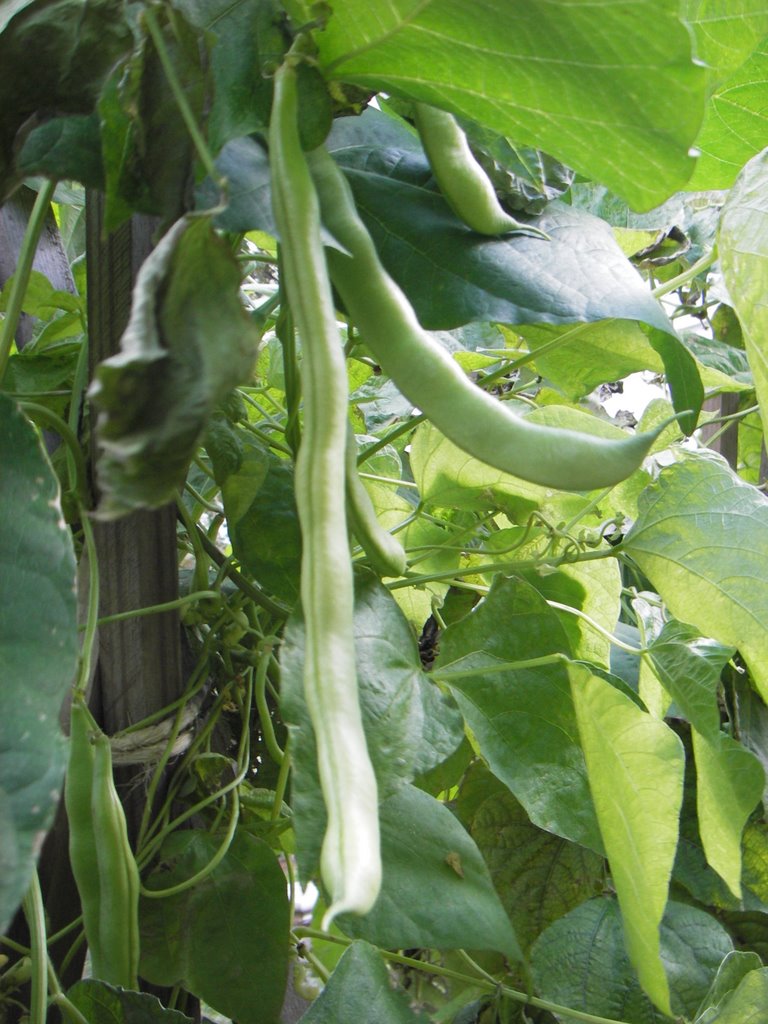
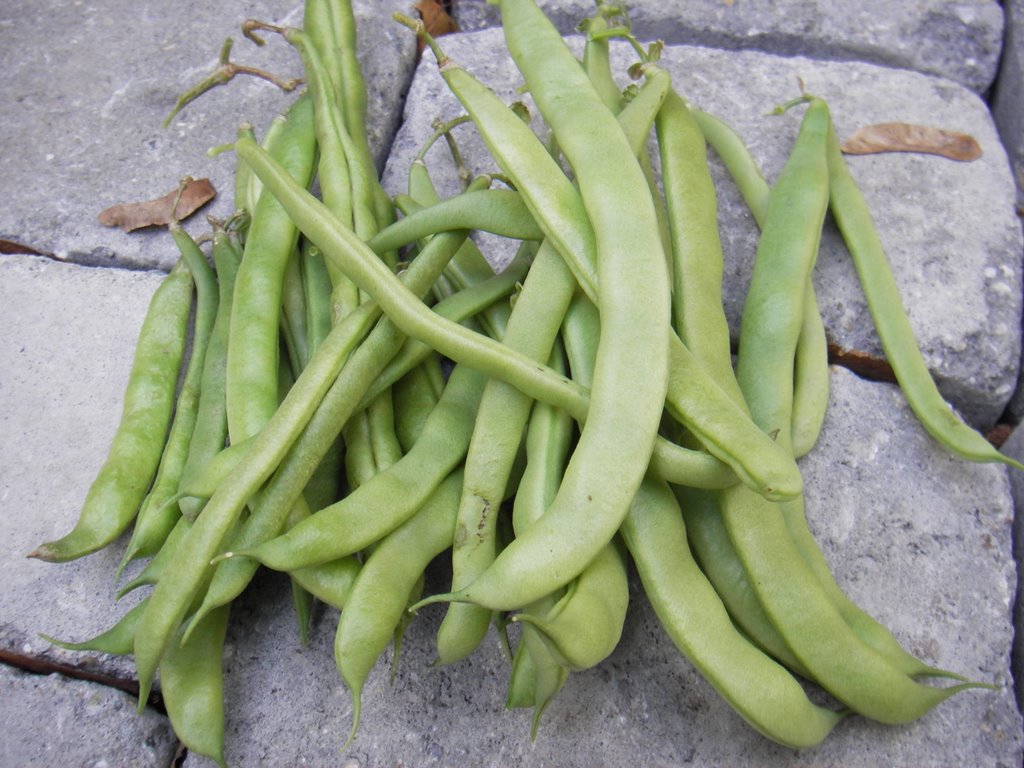
Here's a variety I'll add to my list to grow again next year. Its a green bean called Fortex. As long as a dinner plate (10 inches), stringless, nice vines and best of all really sweet. Delicious.

Fabaceae

Tuesday, September 16, 2008

cooked beans

beans cooking cooked beans in orange bowl

I cooked up my shell beans yesterday. They aren't half as pretty cooked, but they were tasty.

RECIPE: To cook them, I the beans the beans in water 1 hour with 2 carrots, an onion and a bay leaf and then refrigerated overnight. The next evening I sauteed a sliced onion, carrot, garlic and piece of bell pepper in olive oil then added the beans and three oven dried tomatoes and cooked a bit. Then I added some fresh basil leaves.

Fabaceae
Skippy's vegetable recipes

Monday, September 15, 2008

shell beans

shelled beans

I planted several types of shell beans this year, but was bad about labeling them. I'm not sure what varieties these are. Nevertheless, I like the way all the colors look together.

I am not going to dry these beans, but will eat them fresh, or semi-dry, as they are in the photo. They won't need to cook as long as dry shell beans and are supposed to taste better. We'll see.

Here's a list of all the types of beans I remember planting this year, mostly just small patches of each. And some did not sprout, so all types are not necessarily represented here. Plus I planted some seed that I collected and saved from last year. And it seems to me the big gray beans are some pole bean I bought mid summer and forgot to write down. I don't remember what it would have been.

Beans: Royal purple beans has white seeds
Beans: yellow wax beans has black seeds
Beans: Provider (green bush bean, purple seeds)
Beans: Isar (a yellow fillet bush bean, black seeds)
Shell Beans: Flagrano (a bush bean, French Flageolet, pale greenish seeds)
Shell Beans: Tongue Of Fire (pole horticultural bean, large red striped pods & seeds)
Shell Beans: Black Turtle Soup (a bushy plant, small black bean)

beans in shells unshelled beans

Fabaceae

Friday, July 25, 2008

chinese beans

chinese beans

A real treat! My husband brought home these beautiful green beans yesterday. A colleague of his shared them with us. He grew them in his garden. I don't know the name of the variety, but these beans are really delicious. Very firm and crispy, with a tart lemony flavor. The shape and pale green color of these very long beans is really lovely. I just cooked them the way I usually cook beans, but I'm hoping to find a Chinese recipe for them. I am very excited that the gardener offered to share some seeds with me this fall!

Fabaceae

Wednesday, July 16, 2008

cooking fava beans

favas and corn

My favas continue to produce lots of beans! A prolific crop. I am experimenting with recipes to see what I like best. Here is my favorite so far:

--------

Favas, spring onions and corn

Prepare favas by shelling larger beans and cutting smaller ones into 1 inch lengths. Sauté favas in butter and olive oil until they start to brown, about 2 minutes on high heat. Add fresh corn cut off the cob and chopped green onions. Sauté another minute or so.
Vicia faba
Fabaceae

Monday, June 30, 2008

fava beans are almost ripe

favas

I will be picking these soon. They are looking about ready to me. They should grow to 5-8 inches and have full green pods. My sister recommends popping them out of the shell and sauteeing them in butter and olive oil. I also have a grill recipe to try.

Vicia faba
Fabaceae

Wednesday, October 10, 2007

prolific green beans

beans with label beans and gnome
beans
I have two varieties of green beans that have done great this year. Haricots Verts "Maxibel" and Provider, both of which I planted in the middle of May and never replanted. They keep on producing more. Once a week or so I pick all the beans and they always have another crop when I look again. They are saving me many trips to the supermarket.

Fabaceae

Saturday, October 06, 2007

"tongue of fire" beans

bean9
bean1 shell beans on trellis

These beans are called Tongue Of Fire (Phaseolus vulgaris). I planted a package of seeds in late July. Here are descriptions from some seed catalogs:

Johnny's:
The best flavored horticultural bean. The fresh, shelled beans are large, round and have superior flavor and texture, whether fresh, frozen, or canned. 6-7", stringless, red-streaked pods can be eaten and marketed young as snap beans. Original stock seeds collected in Tierra del Fuego, at the southern tip of South America. Avg. 875 seeds/lb. Packet: 95 seeds. Days to Maturity or Bloom: 70 Cold Tolerant Variety does well at lower temperatures and may even be frost hardy.

Victory Seed Company:
Italian heirloom (Borlotto Lingua di Fuoco). A cranberry-type horticultural bean variety originally collected from Tierra del Fuego on the tip of South America. The pods are ivory tan with red streaks and spots as they mature. The seeds are large and roundish. They have an excellent flavor and texture and are good fresh, canned, frozen or dried. About 55 seeds per ounce.

I hoping to try Leslie's recipe for Kale and Cranberry Bean Soup.

Fabaceae

Wednesday, August 29, 2007

freezing green beans

beans on ice beans in baggies

A lot of my beans ripened all at once this year, so I froze a few servings. These instructions are from the Victory Garden Cook Book: Blanch in boiling water for 3 minutes, chill in ice water, then freeze in baggies. Pretty easy. They'll be good in winter stews.

Fabaceae

Saturday, August 18, 2007

yummy fresh edamame

edamame
ready to eat edamame
My fresh edamame was delicious! However, not the same difference as between a home grown and store bought tomato. The home grown edamame is a bit more flavorful and has better texture. It was much more hairy! Since they were very easy to grow, I am planning a bigger crop next year.

To cook, I steamed the freshly picked beans for 3-4 minutes. Just until the pods started to open a little bit. They cooked a little faster than the frozen ones I usually buy. The bowlful I harvested today is about a quarter of my crop I would guess.

Fabaceae

Wednesday, August 15, 2007

ripe soybeans

soybeans 6 soybeans 3
soybeans 5
Looks like the soybeans are ready to eat! Just in time for my birthday. In a few days I'll harvest these hairy beans and check out what garden fresh edamame tastes like.

The variety is Early Haucho from The Cook's Garden that I planted on May 28.

Fabaceae

Monday, July 30, 2007

soybeans

soybeans soybean bush
I don't know why more people don't grow soybeans. It looks like I have a real nice crop coming soon. They were easy to grow and there are many soybeans on each plant. The season seems only a couple weeks longer than green beans. Maybe its not such a popular vegetable to eat, but I love edamame with salt as an appetizer. I'm curious to see if homegrown tastes better than the frozen soybeans I usually eat.

Fabaceae

Saturday, July 21, 2007

green beans for dinner

beans bean plants
Copy of green beans in a bowl
These are Haricot Vert "Maxibel" Bush green beans that I mail ordered from Seeds of Change. I planted this row in the middle of May (with inoculant). I can report that they taste delicious!

Fabaceae

baby soybeans!

baby soybeans
Soybeans are another first for me this year. I am hoping for a good crop of edamame. Good news - the plants have lots of hairy little pods now!

Fabaceae
Wednesday, July 18, 2007

ugly bugs on pole beans

blighted pole beans pole bean bugs
pole bean webs pole bean trouble

OK. Some more ugly pictures of my pole beans. I was asked some questions about what's really going on, so here are some close-up photos.

I guess I see thrips and spider mites. Some mite webs. Also mottled, puckered leaves and fruit. I noticed black aphids earlier but they're gone now. The problem is ONLY affecting my 3 types of pole beans, one of which is way on the other side of my house. No problem with my 3 types of bush beans planted nearby (odd).

So my guess is the real problem is a mosaic virus and the bugs here are just feasting on the weakened plants. I've sprayed in previous years for mites on eggplants and have found that this made the mites worse (it reduces the bugs that feed on the mites). I think the real problem is not usually the mites.

So, I'd love any suggestions here. My plan - no spray. Just remove the pole beans and avoid planting any more this year. I'll plant bush beans instead.

Fabaceae
Sunday, July 15, 2007

pole bean problem

blighted pole beans blighted pole bean leaves
My pole beans have been suffering this year. The vines are very stunted and leaves are mottled and crinkled. I thought they weren't getting enough water and then I thought it was the black aphids that killed the nearby fava beans. But I think it is probably a mosaic virus (maybe bean common mosaic virus or cucumber mosaic virus?). These viruses are spread by aphids and the only solution seems to be planting resistant varieties. I noticed that most of the pole beans at our local community garden also looked heavily affected. It must be a bad year for this virus. The problem is affecting both varieties of pole beans that I planted in my garden back in May (Italian Pole Beans and Blue Lake) and the Scarlet Runner beans I recently bought and have in pots on my porch. Fortunately my bush beans (Royal Burgundy, Provider and Haricots Verts) and soybeans are fine so far.

Fabaceae

Tuesday, June 05, 2007

soy beans

soy sprouts
I am trying to grow soy beans this year for the first time. I planted an early dwarf variety called Early Hakucho. It grows one foot tall. I've experimented with planting it in garden rows and in pots. My first sprouts are just appearing now.

I'm afraid that I do not have the right inoculant for soybeans. I went ahead and used my bean/pea inoculant, but I think soybeans use a different one. If they don't do well, I can blame it on that.

Fabaceae

Thursday, May 31, 2007

bean sprouts

bean sprouts Copy of sprout
Amazing how fast beans grow! Yesterday there were no signs of sprouts and today lots of 1 or 2 inch plants. These are Italian Pole Beans and Haricots Verts bush beans that I planted two weeks ago.

Fabaceae

Saturday, April 28, 2007

inoculant

A fellow garden blogger (Patrick at Bifurcated Carrots) recommended I try inoculant for my peas and beans this year. Last year I had a miserable crop of both and was ready to give up, on the peas at least. But, here I am, giving it one more try. This year with inoculant. Its the first time I've ever used this, so I did some research.

The inoculant I used is garden combination inoculant from Johnny's Selected Seeds, called N-Dure. It contains a mix of rhizobium bacteria: rhizobium leguminosarum viccae, rhizobium leguminosarum phaseoli, and bradyrhizobium sp.

Bradyrhizobium sp. treats lima beans, rhizobium leguminosarum viccae treats fava beans and garden peas, and rhizobium leguminosarum phaseoli treat dry beans and string beans. I don't think this mix includes the bacterium needed by soybeans (bradyrhizobium japonicum), but I will use it with my soybeans anyway in case it helps. Here's a chart for what treats what.

What's inoculant? Here's some excerpts from an informative fact sheet: "The ability of legumes to 'fix' nitrogen depends on the presence of special soil bacteria, known
as rhizobia, which invade the roots of legumes to form nodules. Within the nodules the bacteria convert, or fix, nitrogen from air pockets within the soil into forms useful to the legume plant. When the legume plant decays, the fixed nitrogen becomes available to subsequent crops. The fixed nitrogen is released slowly, often over a period of several years.

Each legume species has a specific rhizobial requirement. For example, rhizobia that infect medics are different from those that infect clover, peas or lupins. If the correct strain of rhizobia for a particular legume is absent in the soil or in very low numbers, effective nodulation will not occur and little, if any, nitrogen will be fixed. In this case the correct strain of rhizobia must be supplied at sowing. This process is known as inoculation.

Inoculation is essential when a legume crop or pasture plant is new to the land on which it is being sown. Once an effectively nodulated legume crop or pasture has been grown, and the rhizobia have been established in the soil, there is no need for inoculation with rhizobia in future seasons".


I've read that chlorinated water kills the inoculated rhizobia, so I'm hoping mine do OK. I had to water a few times last week using our chlorinated tap water. But generally, we've had good rainfall this spring. So far, my pea germination has been great!

Fabaceae
Pisum sativum

topic: soil

Thursday, October 26, 2006

still more pole beans

I went to take down these pole beans yesterday and found many beans still on the vine. New small ones coming along too. I picked enough for a good meal and we ate them last night. So I left the vines up. It seems like a very late season to me. I don't have any gardening records, so I can't really compare. But I hear about snow and cold weather elsewhere in the US. It seems late for Boston to be still growing beans with no frost yet. Our forecast is for cold tonight and the next several days. So our frost is probably just around the corner. I'll cover-up the lettuce tonight.

Fabaceae