Showing posts with label what caused curled tomato leaves?. Show all posts

Friday, August 29, 2014

soil test results say the compost was the problem

I think the results from my soil testing are pretty clear. It's not looking good for the compost...
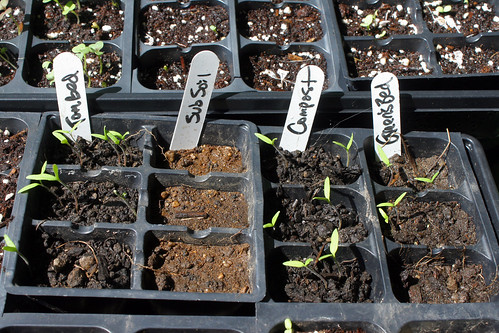
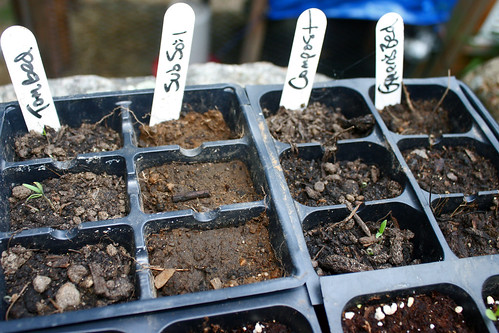
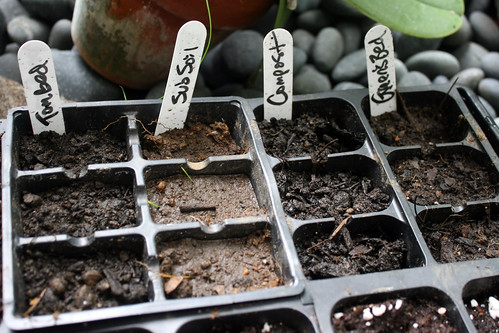
leaves compost_9367 leaves tom bed _9381 leaves greens bed _9374 leaves sub soil_9376

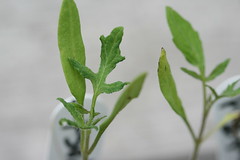
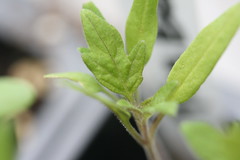
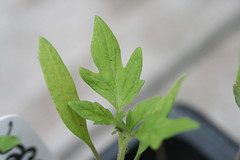
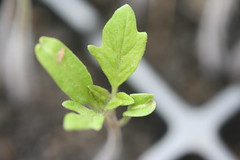
I did the testing because my tomato plants had terribly curled and leathery leaves, tall spindly growth, and very few fruits this year. I had brought in purchased loam and compost this spring, since we have a new property and I don't have my own compost yet and needed to new fill raised beds. For the test, I planted the same tomato seeds in samples of 4 different soils: 1) purchased compost, 2) the mixed soil from the tomato bed (a mix of purchased compost and purchased loam), 3) soil from my lettuce bed (no purchased compost or loam in this), and 4) soil from our yard below the garden beds. Representative primary leaves of seedlings grown in these 4 samples are shown in the same order above.

I think the secondary leaves of the compost-grown test plants look leathery and curled just like my garden plants. The mixed tomato bed soil is sort-of leathery, but the green's bed plants look great. The sub-soil plants are yellow reflecting the lack of nutrients in this soil.

I find it disappointing that purchased compost is toxic to tomato plants. I live in a fairly urbanized area and the compost I bought was made from local yard waste.

Janice, who lives south of me in CT, emailed me and wrote that she contacted an organic farmer last year about a source for good composted manure and he warned about toxic manures these days due to lingering herbicides in animal feed and recommended sticking with home composting and cover crops. It seems this animal feed toxicity is often a problem now in garden composts. Herbicides used on lawns aren't as toxic or persistent as for example, Roundup, which is what is sprayed on the Roundup Ready (GMO) corn used for animal feed. So my compost should have been OK if it was just suburban grass clippings and leaves with suburban lawn chemicals. But it seems its not OK as my tomatoes didn't grow well at all in it. I'm really disappointed that there are so many chemicals in use that we can't buy a safe compost product. I look forward to producing my own compost and not being in a position where I need to purchase compost or loam for my gardens.

Monday, August 25, 2014

late blight hit my tomatoes

My curled leaved tomatoes have been hit a final blow, late blight. I picked all the red and green fruits and cut down the plants. I'll bag the infected plants soon and let them heat-kill in the sun for a few days before disposing in the trash.

I was able to harvest a good bucket of tomatoes to use for a few weeks. Here's hoping for a better tomato season next year!!

tomatoes_9431 tomatoes_9432

Friday, August 08, 2014

tomato soil test day 7

test-2014-08-06 Looks to me like the "sub soil", the soil underneath my beds may be the problem. I did a soil test on this prior to plating and knew it was lacking in nutrients: pH 5.9, P very low(1.6), K low (63), Ca very low (500), Mg low (46), Sulfur good (14.2).

Maybe its not a toxic chemical in the soil or a virus, but could be the lack of nutrients? I fertilized once this season with granulated GardenTone, but think I will try a few treatments with a liquid compost tea or fish emulsion to get down into the lower soil where the roots are.

Wednesday, August 06, 2014

soil test results

tomato test of soils9280 This is the test result at day 5. Seedlings are sprouting in three of the four soils: tomato bed, compost and greens bed. I'll give it more time before I make any conclusions.

Thursday, July 31, 2014

did my soil cause the curled-up tomato leaves?

soil test photo 1 In addition to my fall planting, I also set up a test of my garden soils to try to figure out if a problem in the soil caused my curled-up tomato plants. I'd like to know for next year. I have lots of Siberian Red tomato seeds, so I planted these in four soil samples:

1. Tomato bed (this produced plants with curled leaved)
2. Sub-soil (lawn)
3. Purchased compost (same compost that went into the tomato bed)
4. Green's bed (loam and compost from sources different than tomato bed)


I suspect the problem is with the purchased loam that went into the tomato bed. I bet it was treated with an herbicide (2,4-D or glyosphosphate) at some point. Sad that this is so prevalent. Lots of plants can't handle these chemicals and they get spread around all over. 2,4-D degrades rapidly in soils (half life = 6.2 days), so if this is the problem it should dissipate soon.

Fortunately, USDA tests of food crops grown in 2,4-D treated soils risks found that levels are not of concern. OK, but the tomatoes don't grow very well. The 2,4-D dietary risk assessment considered both acute and chronic risks from residues in food based on field trials --- so ... we can eat the produce.

Friday, July 11, 2014

the good, the bad and the ugly...... I am fighting garden pests

I have many crops doing great this year. At my community plot, where I have been gardening for about 7 years now, I have super potatoes, tomatoes, onions, garlic, and winter squash. Only minor problems there, including a few Colorado potato bugs that I have been controlling by hand picking and some minor squash borer damage that I'm sure the plants can outgrow. Late blight can be a problem at the large community garden with lots of tomatoes. Its been confirmed nearby (on Long Island) already,so I will start spraying my tomatoes there every 10 days with copper spray. The plants I'm growing are all late blight resistant, so fingers crossed it won't be a problem.

My new home garden has more issues, and more crops doing well. I have super greens, beets and carrots. The bok choy was amazing early in the season and snow peas are awesome. Popcorn, peppers and eggplants are coming along well. Basil is good, with only a bit of slug damage. I am spreading Sluggo and hope they will go away. The not so good are my broccoli, tomatoes and summer squash.

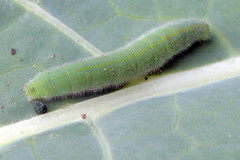
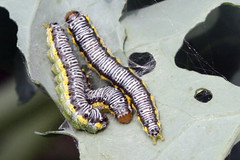
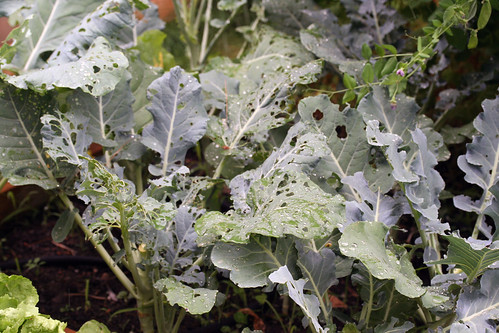
The broccoli problem is easy to figure out: caterpillars. I have both cabbage worms (from the white cabbage butterfly) and cross-striped cabbage worms. They showed up just as I was harvesting my early bok choy, so that crop had no worm damage. They are very hungry critters and have made a mess of my broccoli plants and are in the heads too. They are also eating my second crop of bok choy. I hand picked a few and mostly was hoping they just would go away on their own, rather than spray. But earlier this week I bought a bottle of spinosad (Captain Jack's Deadbug Spray) and gave them a dousing. I was impressed with how well it worked. The worms were all gone when I checked the plants the next day. I have since picked a few heads and they are worm-free. Spinosad is pretty strong spray and should only be used as a last resort. I hope it did not affect any of my beneficial insects.
cabbage worm on broccoli cross-striped cabbageworm on broccoli worm eaten broccoli

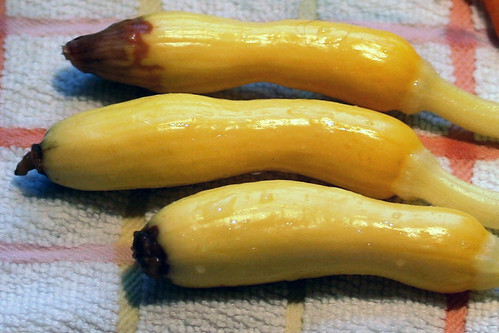
The summer squash problem I am trying to figure out. I have rot at the blossom end of young yellow squashes. I don't know if it is a lack of pollination (I see very few bees there), or blossom end rot due to poor calcium absorption. If its the latter, the problem may be soil pH. The pH is 6.3, calcium 1440 ppm (optimum calcium range 1000-1500 ppm). I read that the optimum pH to avoid blossom end rot should be 6.5-6.8. I will try adding some lime and see if it helps. I am also planting as many flowers around the bed as I can squeeze in hoping to attract more bees in case pollination is an issue. The flowers certainly can't hurt. summer squash with rot at blossom end

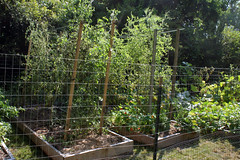
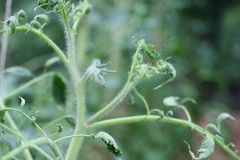
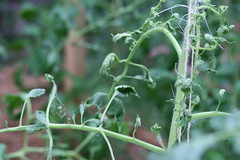
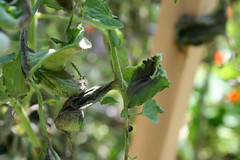
The problem that concerns me most is my tomatoes. They are growing tall and spindly with curled leaves. I really hoped for a great crop of tomatoes this year. I have 24 plants, all different types of heirlooms. They do have a few tomatoes forming on the plants, but the leaf curl is severe and the plants look terrible. I am thinking it is either a tomato virus (maybe transmitted by the white flies I noticed on the plants early in the season), or root damage as from roots going down into the soil below my raised bed. The test of this lower soil showed a pH of 5.9 and very low levels of nutrients P, K, Ca and Mg. I've been fertilizing regularly in hopes this will help. Unfortunately I think its probably a virus and there's nothing I can do about it. :-( curled tomato leaves curled tomato leaves 8703