With a frost coming tonight, I did a lot of clean up at my home garden:
- Pick the last of the green tomatoes, eggplants, peppers and watermelons
- Remove tomato tepees (10-ft wood stakes)
- Pull tomato plants and compost (nice with no late blight - right into compost bin)
- Pull and compost all frost sensitive plants: pepper, eggplant, basil, cilantro, beans
- Cut off sweet potato vines and compost (bins nice and full by now!)
- Find my heavy row cover in shed, lay it out on lawn and cut pieces to size. It's Agribon+ AG-19 from Johnny's, frost protection to 28F. I used doubled fabric.
- Cover beds with lettuce and winter greens
Saturday, October 17, 2015

garlic sources for planting
Here's the list of garlic seed sources that people have recommended so far from my post a few days ago. They look awesome! I can't wait to try out some new sources. If you have one to add, let me know and I'll include it here.
Pacific Northwest:
Filaree Garlic Farm - So many! This source was seconded and thirded! Washington State
Adaptive Seeds: Good selection, also grey shallots, free shipping over $50. Oregon
Territorial Seeds: Oregon
Colorado:
The Garlic Store
Potato Garden
New England:
Fedco bulbs division: Maine. Ordering deadline is early September.
High Mowing Organic Seeds: Vermont
Green Mountain Garlic: Vermont
Everywhere:
A garlic festival: Four are in the New England/New York area
Local farmer's market: no shipping charge, varieties that do well in your area
Costco: Bulbs from California
Pacific Northwest:
Filaree Garlic Farm - So many! This source was seconded and thirded! Washington State
Adaptive Seeds: Good selection, also grey shallots, free shipping over $50. Oregon
Territorial Seeds: Oregon
Colorado:
The Garlic Store
Potato Garden
New England:
Fedco bulbs division: Maine. Ordering deadline is early September.
High Mowing Organic Seeds: Vermont
Green Mountain Garlic: Vermont
Everywhere:
A garlic festival: Four are in the New England/New York area
Local farmer's market: no shipping charge, varieties that do well in your area
Costco: Bulbs from California
Thursday, October 15, 2015
green tomatoes
Seems we might get a freeze or frost Sunday night. I picked 32 lbs of green tomatoes today!
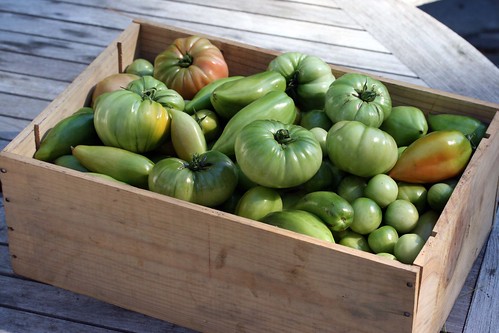
This caps off a pretty good harvest. I didn't weigh everything, but I bet I harvested 100-150 lbs of tomatoes.
This caps off a pretty good harvest. I didn't weigh everything, but I bet I harvested 100-150 lbs of tomatoes.
Tuesday, October 13, 2015
sweet potato harvest
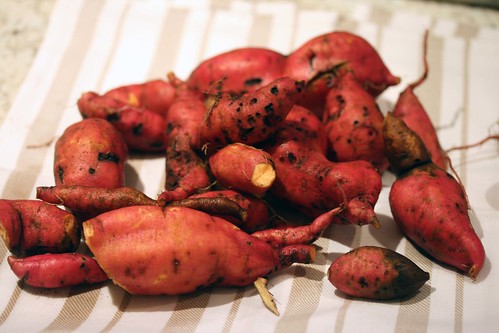
I started digging my sweet potatoes this week. I only dug a small area at the back of the bed. I was pleased to find a lot of tubers, but SO much worm and grub damage. OMG.
I was looking at Daphne's sweets and they are picture perfect. I have a challenge ahead of me. I wonder if I can get my soil cleaned up for a perfect future harvest? A Clemson University Fact sheet says there are all sorts of beetle grubs and wire worms that can eat into sweet potatoes. They recommend hand picking beetles, a Bacillus thuringiensis product, crop rotation, and winter tilling.
I looked into winter tilling at LSU AgCenter. They suggest turning in compost in the fall/winter to increase decomposition, kill or inactivate disease organisms, insects and weed seeds, increase soil drainage in spring, and incorporate lime if needed. Sounds good. I'll try it in a few beds.
BTW, in spite of their appearance, my sweet potatoes taste delicious!
I was looking at Daphne's sweets and they are picture perfect. I have a challenge ahead of me. I wonder if I can get my soil cleaned up for a perfect future harvest? A Clemson University Fact sheet says there are all sorts of beetle grubs and wire worms that can eat into sweet potatoes. They recommend hand picking beetles, a Bacillus thuringiensis product, crop rotation, and winter tilling.
I looked into winter tilling at LSU AgCenter. They suggest turning in compost in the fall/winter to increase decomposition, kill or inactivate disease organisms, insects and weed seeds, increase soil drainage in spring, and incorporate lime if needed. Sounds good. I'll try it in a few beds.
BTW, in spite of their appearance, my sweet potatoes taste delicious!
Monday, October 12, 2015
today's garden work
At my community plot:
- Clean up and compost the last of the squash vines.
- Rack beds all smooth (except one with beans, fennel and tomatillos still growing)
- Spread and rack in cover crop seeds (I used Johnny's green manure mix: rye, clover, vetch and field pea)
- Clean up and compost the last of the squash vines.
- Rack beds all smooth (except one with beans, fennel and tomatillos still growing)
- Spread and rack in cover crop seeds (I used Johnny's green manure mix: rye, clover, vetch and field pea)
Sunday, October 11, 2015
ordering garlic - where do you buy garlic?
I FINALLY remembered to order my garlic. I hope it gets here soon. I'd like to plant it at the end of this month - in 2 or 3 weeks.
My garlic crop had problems this year. More than half of it rotted in the ground. I only harvested 40 heads so I decided to eat them all and buy new (clean) stock. I usually like to save 75-100 cloves (about 15-20 of the biggest heads) for planting.
I checked a couple local sources first (Johnny's and Fedco) but seems they don't sell garlic.I had thought I might buy it at a local Farmer's Market, but didn't get to ANY this summer. (I've been swamped with my own vegetables...)
I ordered my seed garlic today from my old favorite: Territorial Seed Co. Three varieties: Duganski, Music, and Late Italian. (The first two are old favorites. I'm trying out Late Italian, a soft nect that sounds good.)
Where do you buy your seed garlic? I'd love to set up a list of sources.
My garlic crop had problems this year. More than half of it rotted in the ground. I only harvested 40 heads so I decided to eat them all and buy new (clean) stock. I usually like to save 75-100 cloves (about 15-20 of the biggest heads) for planting.
I checked a couple local sources first (Johnny's and Fedco) but seems they don't sell garlic.I had thought I might buy it at a local Farmer's Market, but didn't get to ANY this summer. (I've been swamped with my own vegetables...)
I ordered my seed garlic today from my old favorite: Territorial Seed Co. Three varieties: Duganski, Music, and Late Italian. (The first two are old favorites. I'm trying out Late Italian, a soft nect that sounds good.)
Where do you buy your seed garlic? I'd love to set up a list of sources.
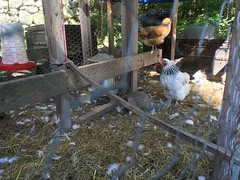
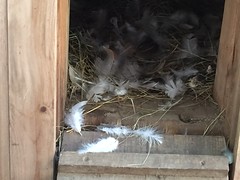
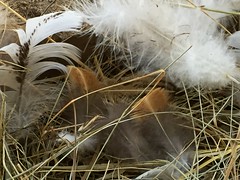
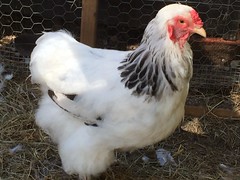
chickens are molting
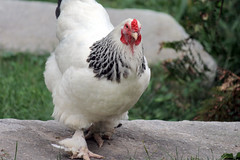
My chickens have started molting. The coop is covered with feathers. I guess they are shedding their dirty summer feather and will grow in fluffy new down coats for winter. I'm told it takes a lot of protein to molt and they don't lay eggs during this time. I'm down to one egg a day. Only because the youngest (Roxy: my barred Rock) hasn't started her molt yet.
Today, I'll try to remember to get their winter light set up. I put a standard 40 watt bulb in the coop on a timer so they get about 12 hours of light a day, with the extra time in the morning. It gets dark about 6 pm now, so it should come on at 6 am. (6 am to 9 am)
what caused my garlic to rot? rotation, rotation, rotation
I've been thinking about why half of my garlic crop rotted this year.
In early spring, my garlic plants yellowed and curled and then died. This started mostly in one area of the bed and then gradually other plants curled and died more slowly. Some just stopped growing looking like a small plant, but when pulled, the bulb was rotten.
Once I saw the plants rotting, I worried that I planted where onions had been last year and maybe garlic the prior. This is my list for crops the bed the garlic was in.
2009: tomatoes, peppers
2010: beans, dill
2011: squash
2012: garlic
2013: roots, including onions
2014: squash
2015: garlic
So next I looked into garlic rot information online. I looked at a Cornell Plant Clinic factsheet on garlic diseases. There are several different types of garlic rot. I'm not sure which I had, but the ways to address them all are the same, so I'm not going to worry about an ID.
The Cornell sheet says:
Well, next year I'll have clean fresh garlic seed and I'll see what I can do to avoid this bed for a long time.
In early spring, my garlic plants yellowed and curled and then died. This started mostly in one area of the bed and then gradually other plants curled and died more slowly. Some just stopped growing looking like a small plant, but when pulled, the bulb was rotten.
Once I saw the plants rotting, I worried that I planted where onions had been last year and maybe garlic the prior. This is my list for crops the bed the garlic was in.
2009: tomatoes, peppers
2010: beans, dill
2011: squash
2012: garlic
2013: roots, including onions
2014: squash
2015: garlic
So next I looked into garlic rot information online. I looked at a Cornell Plant Clinic factsheet on garlic diseases. There are several different types of garlic rot. I'm not sure which I had, but the ways to address them all are the same, so I'm not going to worry about an ID.
The Cornell sheet says:
... as with any crop, it is important to plant clean healthy seed. For most of the mentioned diseases (Basal Rot, White Rot, Downy Mildew and Nematode infestation), once the pathogen is established in a field, rotation away from Allium spp. for several years is an essential management tool.It looks to me like I didn't rotate well because onions are also an Allium species. I think they snuck in there are ruined my 3 year rotation. Darn.
Well, next year I'll have clean fresh garlic seed and I'll see what I can do to avoid this bed for a long time.
Friday, October 09, 2015
today's harvest
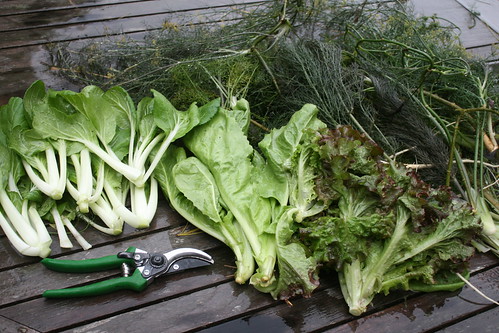 Lettuce, bok choi and herb fennel. What do I do with all that fennel herb?! I bought is not realizing that bulb fennel and herb fennel are different.
Wednesday, October 07, 2015
frost?
We're creeping toward our average first frost date... It would normally be October 10 and was right on schedule last year. This year, it looks like we have at least a week to go. That's good. I want to get my winter bed covers in place before we get too cold. I'm planning to dig out around the bed and run hardware cloth 6 inches down to keep the voles out. Also planning to order a bottle of castor oil to soak the soil at the edges of the bed. Double protection - after the disaster last year.
Monday, October 05, 2015
today's garden work
I was at my community garden plot. Today's work:
- Pick the last of the winter squashes and one last summer squash: a nice Costata Romanescu zucchini.
- Harvest the green tomatoes. Take down and compost the dry tomato vines. (I didn't have time to water these for the past, very dry, two month.)
- Harvest green beans. I got a nice late crop of Jumbo, a wide Italian bean.
- Cut back dry perennial flowers, like tansy, and the tall dried up sunflowers.
- Weed the beds so they are ready for seeding a cover crop next week. The garlic can be planted in a couple weeks too. (I have to order that! I forgot.)
All that's left for vegetables in my community is some very late tomatillos, covered with flowers. Some small fennel. The beans may squeak in another crop. And I have a good row of leeks that are small without my watering, but still respectable (in my opinion).
There are flowers there too: some giant pink zinnias, nasturtiums and anise hyssop (covered with bees).
- Pick the last of the winter squashes and one last summer squash: a nice Costata Romanescu zucchini.
- Harvest the green tomatoes. Take down and compost the dry tomato vines. (I didn't have time to water these for the past, very dry, two month.)
- Harvest green beans. I got a nice late crop of Jumbo, a wide Italian bean.
- Cut back dry perennial flowers, like tansy, and the tall dried up sunflowers.
- Weed the beds so they are ready for seeding a cover crop next week. The garlic can be planted in a couple weeks too. (I have to order that! I forgot.)
All that's left for vegetables in my community is some very late tomatillos, covered with flowers. Some small fennel. The beans may squeak in another crop. And I have a good row of leeks that are small without my watering, but still respectable (in my opinion).
There are flowers there too: some giant pink zinnias, nasturtiums and anise hyssop (covered with bees).
Friday, October 02, 2015
potatoes - a tiny harvest
Some things grew great this year and others, well, :-( didn't. On my "didn't" list, potatoes.
I thought they were doing well until last week when I dug them. An underground crop is a mystery until you go to harvest!
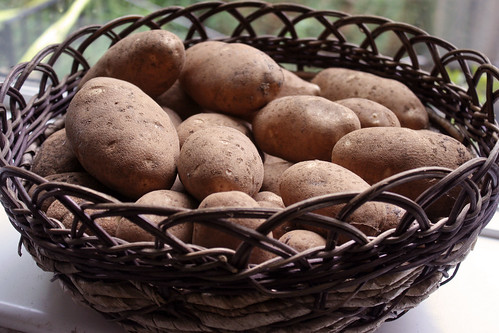
This spring I planted only one type of potato because in the past I've had so many seed tubers left over that I can't find space for. Usually I crowd the seed, spacing them maybe 6 inches apart when 12 would be better. So I only planted my favorite, russets. And I tried a new variety, Canela, from Territorial, that is a high yield potato. I planted 5 lbs.
Potatoes will yield up to 20 times more than you plant. I usually expect about 10 times. So, I was hoping for 50 lbs, or at least 30. I ended up with about 15-20 lbs. It was a lot of work to dig the bed searching for spuds that were few and far between. (Even with Skippy's help...) Each plant had about 5 potatoes and their were hardly any plants.
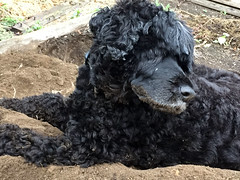
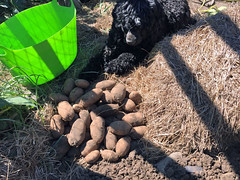
The potatoes I got were a mix of sizes, big and small. The usual scab I get with Burbank russets. They're delicious baked, fried or mashed - can't complain about that.
So, to try to figure this out my low yield, I looked back over my photos from the season. I think part of it is that they didn't sprout well. I remember I was short of time and the seed potatoes sat in their box a while. I didn't get them sprouting in a warm spot before planting. And I didn't add much compost to the bed. Hmm, come to think of it, I didn't give them any fertilizer either. On top of that, the mid summer weather was certainly not great for potatoes - very hot and dry. The plants had good foliage, so I assumed they were happily growing tubers. I'm not sure which of these was the biggest problem, maybe the combination. This gives me a list of things to make sure I do next year: sprout, compost, fertilize and water! Oh, and go back to planting more varieties and crowing them in.
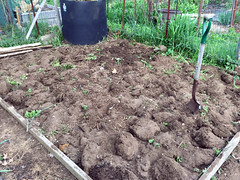
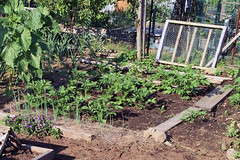
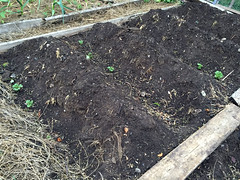 May 12, the freshly turned bed. May 31, sprouts in the furrows.
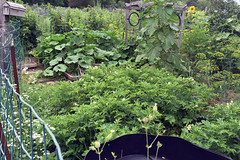 June 22, growing plants. July 18, fully grown potato plants.
I thought they were doing well until last week when I dug them. An underground crop is a mystery until you go to harvest!
This spring I planted only one type of potato because in the past I've had so many seed tubers left over that I can't find space for. Usually I crowd the seed, spacing them maybe 6 inches apart when 12 would be better. So I only planted my favorite, russets. And I tried a new variety, Canela, from Territorial, that is a high yield potato. I planted 5 lbs.
Potatoes will yield up to 20 times more than you plant. I usually expect about 10 times. So, I was hoping for 50 lbs, or at least 30. I ended up with about 15-20 lbs. It was a lot of work to dig the bed searching for spuds that were few and far between. (Even with Skippy's help...) Each plant had about 5 potatoes and their were hardly any plants.
The potatoes I got were a mix of sizes, big and small. The usual scab I get with Burbank russets. They're delicious baked, fried or mashed - can't complain about that.
So, to try to figure this out my low yield, I looked back over my photos from the season. I think part of it is that they didn't sprout well. I remember I was short of time and the seed potatoes sat in their box a while. I didn't get them sprouting in a warm spot before planting. And I didn't add much compost to the bed. Hmm, come to think of it, I didn't give them any fertilizer either. On top of that, the mid summer weather was certainly not great for potatoes - very hot and dry. The plants had good foliage, so I assumed they were happily growing tubers. I'm not sure which of these was the biggest problem, maybe the combination. This gives me a list of things to make sure I do next year: sprout, compost, fertilize and water! Oh, and go back to planting more varieties and crowing them in.
May 12, the freshly turned bed. May 31, sprouts in the furrows.
June 22, growing plants. July 18, fully grown potato plants.
Thursday, October 01, 2015
nine ears of Calico popcorn
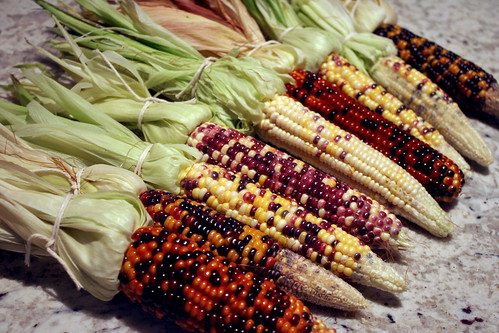
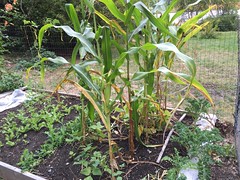
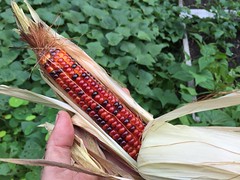
I was thinking my popcorn was a complete failure, but no, 9 pretty ears. Yippee! I planted it late and then didn't water and lost most of the seedlings. I only had one row that grew well. With one row, I was surprised to get any pollination. I harvested today, even though the ears weren't fully dried on the stalks as it looked like a chipmunk started nibbling on an ear.
budded fall peas
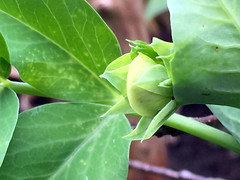
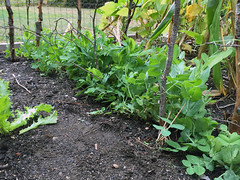
I've tried for the past 10 years to get a fall crop of peas and haven't been successful. Our weather goes from hot to frost too fast. But I've got my fingers crossed this year. Maybe.... My pea plants are budded and our weather is pretty nice, with nights not going much below 50 F yet. Our season generally seems about 2 weeks late this year. So maybe 2 or 3 weeks until frost. Maybe enough time for these peas.
I started spouting these peas (Burpeeana Early, 63 days to harvest) on August 8 indoors in paper towels and then planted them outside a week later. The weather was so hot that I planted them next to my popcorn for afternoon shade. I also planted Johnny's Sugar Snap peas at the same time but they have not done well probably since they had no shade.
mystery tree - any guesses?
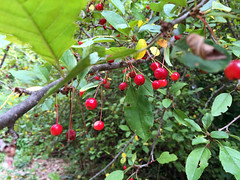
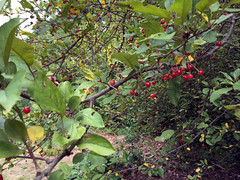
This tree is behind my garden. It's full of beautiful white flowers in the spring. Now it has tiny fruits that are shiny red. I wish I knew what is was.
Subscribe to:
Posts (Atom)